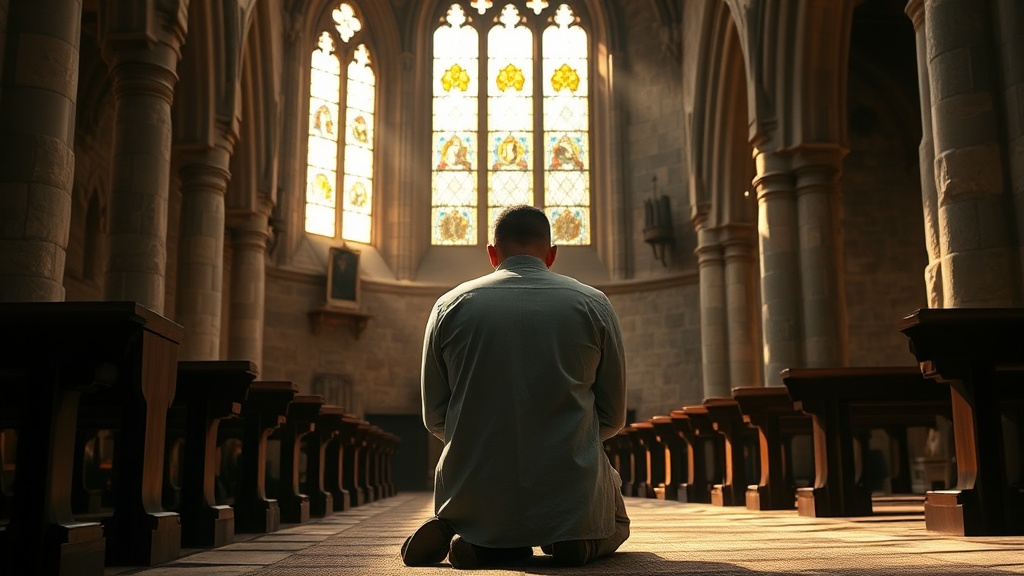
Grief Support in the Church: How Faith Communities Can Walk with the Bereaved
A practical guide for churches and individuals on providing genuine, sustained grief support — what grieving people actually need and how the church can be the body of Christ in their pain.
Testimonio
Change your heart radically through the love of Jesus Christ.
The church, at its best, is the community that does not leave you alone in your grief. It shows up when no one else does, sustains over months when the rest of the world has moved on, and offers a hope that no secular bereavement service can provide.
The church, at its worst, offers casseroles for a week and then disappears — leaving the bereaved to discover that the most isolated season of grief begins about three months after the funeral, when everyone assumes you've recovered.
We can do better.
What Grief Actually Looks Like
Understanding grief helps the church respond to it appropriately.
Grief is not linear. The popular model of "stages of grief" (Kübler-Ross) was originally developed for the dying, not the bereaved, and has been widely misapplied. Grief doesn't follow neat stages. It floods and recedes, appears unexpectedly, returns on anniversaries and holidays, and doesn't follow a predictable timeline.
Grief is individual. There is no "right way" to grieve. Some people weep freely; others seem composed but carry profound internal grief. Some process alone; others through talking. Neither is wrong.
Grief takes much longer than culture expects. American culture gives grieving people about two weeks before the implicit pressure to "get back to normal" begins. In reality, most people grieving a significant loss are still in active grief a year later, and some losses take years to integrate.
Grief is physical. It affects sleep, appetite, immune function, concentration, and energy. People in acute grief often feel physically ill.
Grief is often mixed with other emotions. Anger (at the deceased, at God, at themselves, at the circumstances). Guilt (survivor's guilt, regret). Relief (when death follows long illness, which then generates more guilt). Fear. Even joy in memories.
What the Bible Says About Grief
The Bible takes grief seriously. It doesn't tell us to skip it or spiritualize it.
Jesus wept. John 11:35 — Jesus wept at Lazarus's grave, knowing he was about to raise him. Tears were not inappropriate even in the face of certain resurrection.
Paul gives permission for grief. 1 Thessalonians 4:13 — "We do not want you to grieve as others do who have no hope." Not: don't grieve. Rather: grieve differently — with hope informing your grief, but not eliminating it.
The Psalms are full of lament. At least one-third of the Psalms are laments — raw, honest expressions of grief and complaint to God. Psalm 88 ends without resolution: "darkness is my closest friend." The Bible models honesty in grief.
Mourning is honored. Matthew 5:4 — "Blessed are those who mourn, for they shall be comforted." Mourning is part of the Beatitudes — God is present with those who mourn and meets them in their grief.
What Grieving People Actually Need
The First Week: Practical Care
- Meals delivered to the home (coordinate through a signup to avoid duplication and gaps)
- Help with logistics: transportation, childcare, making calls
- Simple presence: "I'm here. You don't have to talk."
- Help with arrangements: funeral home, death certificates, financial institutions
The First Month: Continued Presence
The casseroles stop. The visitors slow. This is when many grieving people hit a wall. The church should:
- Continue checking in — brief texts, calls, visits
- Help with ongoing practical needs
- Create space for grief: inviting the person to share memories, to cry, to process
- Watch for signs of complicated grief (see below)
Three Months to One Year: Sustained Community
This is when church community often fails grieving people most. The loss feels "old" to everyone except the person who lost someone. The church should:
- Mark anniversaries and milestones intentionally (the person's birthday, the anniversary of the death)
- Not expect the bereaved to "be better" by a certain point
- Continue including the bereaved in community events, even if their participation is limited
- Offer or connect to formal grief support (grief groups, counseling)
Holidays: Special Attention
The first Christmas, the first Thanksgiving, the first birthday after a significant loss — these are particularly hard. The church can:
- Reach out specifically before major holidays
- Create space in community gatherings for acknowledgment
- Offer a "Longest Night" or "Blue Christmas" service for those experiencing difficult holidays
Creating a Church Grief Ministry
Grief Support Groups
A structured grief support group — facilitated by a trained leader, meeting regularly — provides something that individual pastoral care cannot: community with others who understand. GriefShare, Stephen Ministry, and Griefwork Institute provide excellent frameworks and training.
Key features of an effective group:
- Regular meeting time and place
- Trained facilitator (not necessarily a therapist, but trained)
- Structured format with freedom for genuine sharing
- Welcome to all — regardless of how long ago the loss occurred
- Confidentiality
Stephen Ministry
Stephen Ministry trains and deploys lay caregivers for ongoing one-to-one pastoral care — including grief care. This extends the pastoral care capacity of the church far beyond what professional staff alone can provide.
Pastoral Care Team
A team of trained lay people who are specifically assigned to follow up with bereaved members, coordinate meal trains, and provide ongoing check-ins.
Memorial Services
Annual services that specifically honor and grieve those who have died in the past year — creating communal space for grief that might otherwise be isolated.
For Individual Christians: How to Support a Grieving Friend
Show up. Don't wait until you know what to say. Show up without words. Presence is the primary gift.
Listen more than you talk. The grieving person often needs to tell the story — sometimes many times. Listen without rushing them to a conclusion or resolution.
Say the person's name. People who are grieving often fear that the person who died will be forgotten. Mentioning the name — "I've been thinking about John this week" — is a gift.
Let them talk about how they died. For many bereaved people, the story of the death needs to be told and retold. Let them tell it.
Don't minimize or fix. "Everything happens for a reason" is not comforting — it's dismissive. "At least they're not suffering" minimizes the loss. "You should be grateful for the time you had" is not what a grieving person needs to hear. Just be present and let the pain be what it is.
Don't disappear after a month. Keep showing up. Keep texting. Keep calling. The most isolated grief often comes after everyone else has moved on.
Practical care. Bring food. Offer to drive to appointments. Help with tasks that feel impossible. Ask specifically: "What would be most helpful right now?"
Remember the anniversaries. A text on the anniversary of the loss, on the person's birthday, or on a significant holiday: "I've been thinking about you and about [name] today. I love you." This is an enormous gift.
Complicated Grief and When to Refer
Some grief does not follow a normal trajectory and requires professional support:
Signs of complicated grief:
- Inability to function (work, basic self-care) months after the loss
- Intense guilt or self-blame
- Thoughts of suicide or self-harm
- Persistent anger that is becoming destructive
- Complete inability to accept the reality of the loss long after the death
- Significant substance use beginning after the loss
When you observe these signs, gently encourage professional support: "I'm concerned about you. Would you be willing to talk to a counselor or therapist? There are people specifically trained to walk with people through grief."
A Prayer for the Bereaved
Lord, this pain is real and it is deep. Don't ask them to skip it or rush through it. Be with them in it — the God who wept at a graveside, who meets us in our darkest places. Sustain them through the long road of grief. Raise up community around them. And in your own time, your own way — bring healing. Amen.
Frequently Asked Questions
How long should grief take? There's no "should." Most people begin to integrate a major loss in 1-2 years, but grief never fully disappears — it changes shape. Be patient with yourself and with others.
Is it wrong for a Christian to feel angry at God in grief? No. The Psalms model this repeatedly. Honest anger brought to God is not a failure of faith; it's relationship. God can handle your anger. Bring it to him.
What's the difference between grief and depression? They overlap and can coexist. Grief is a natural response to loss; depression is a clinical condition. Signs that grief may have become depression: persistent inability to experience any positive emotions, hopelessness about the future, thoughts of self-harm. Seek professional support if these are present.
Should the church require grief counseling? No — counseling should be offered, not required. But actively encouraging it and making it accessible removes barriers that prevent bereaved people from getting help they need.
Can faith make grief worse? Sometimes. If faith creates pressure to "get over it" quickly, to have "enough faith" that you don't grieve, or to feel guilty for not feeling peace — then yes. Healthy faith makes grief possible to hold, not something to perform around.
Continue your journey in the app
Guided meditations, daily Scripture, journaling with verse suggestions, and more — designed for your spiritual growth.