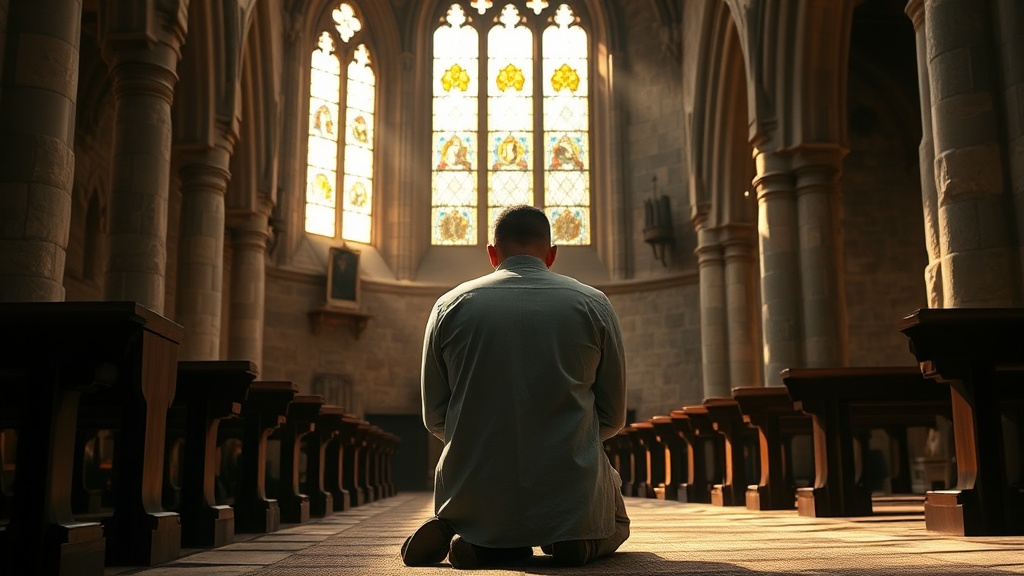
Dealing with a Broken Friendship as a Christian: Grief, Grace, and Moving Forward
Friendship loss is a grief the church rarely addresses. A biblical guide to processing broken friendships honestly and with grace.
Testimonio
Change your heart radically through the love of Jesus Christ.
The ending of a close friendship is a grief that doesn't get much pastoral attention. It doesn't have a ritual or a support group. People don't usually offer condolences. And yet the loss of a deep friendship — to conflict, drift, betrayal, or the simply moving on of life — can be one of the most painful relational experiences we have.
David wrote about it from experience: "Even my close friend, someone I trusted, one who shared my bread, has turned against me" (Psalm 41:9). The intimacy of friendship makes its loss particularly acute.
The Bible on Friendship
The Bible takes friendship seriously as a form of covenant love. David and Jonathan's friendship is one of the most celebrated in Scripture: "Jonathan became one in spirit with David, and he loved him as himself" (1 Samuel 18:1). Jonathan's loyalty to David — at the cost of his relationship with his father, his social standing, and ultimately his kingship — is a model of deep covenant friendship.
Proverbs 17:17: "A friend loves at all times, and a brother is born for a time of adversity." Proverbs 18:24: "One who has unreliable friends soon comes to ruin, but there is a friend who sticks closer than a brother."
The biblical vision of friendship includes loyalty through difficulty, honest speech (Proverbs 27:6: "Wounds from a friend can be trusted"), shared burden-bearing, and a closeness that mirrors the covenant love between God and his people.
Why Friendships End
Friendships end for many reasons:
- Conflict that is not resolved
- Betrayal or violation of trust
- Geographic distance and life transitions
- Growing in different directions
- One person's growth that the other can't or won't match
- Unhealthy patterns that finally make continuation impossible
- Simply drifting as new relationships and life circumstances emerge
Not all friendship endings are failures. Some friendships have a season, and the season ends. Grieving the loss doesn't mean anyone failed.
The Grief of Friendship Loss
The grief is real. What might have been expected to last forever — or at least much longer — is gone. With it goes:
- The specific knowing and being known that characterized that relationship
- Shared history and memory
- The future you imagined together
- Sometimes, a whole social network connected to the friendship
Allowing yourself to grieve this — rather than minimizing it ("I'll make new friends") or catastrophizing it ("I can't trust anyone") — is the healthy response.
Navigating a Broken Friendship Biblically
1. Seek reconciliation if possible. Matthew 18:15: "If your brother or sister sins against you, go and point out their fault, just between the two of you." Direct, honest conversation is the first step when conflict is the cause. Not every friendship can or should be restored, but the attempt at honest resolution honors both people.
2. Forgive even when reconciliation isn't possible. Forgiveness is for your sake, not the friendship's. Release the grievance even if the friendship cannot be reconstructed.
3. Allow the grief. Let yourself feel the loss. Don't spiritualize it away or rush past it.
4. Examine what you can learn. Without self-condemnation, what does this friendship's ending tell you about patterns in how you relate? Are there changes that might help future relationships?
5. Be careful with mutual friends. Triangulation — drawing others into the conflict — usually complicates rather than helps. Handle the friendship directly, not through others.
6. Move toward new community. Not immediately, and not as avoidance of grief — but genuine friendship is built over time, and new friendships can be built in community.
Frequently Asked Questions
Is it normal to grieve a broken friendship?
Yes. Friendship involves genuine investment and genuine love. Its loss is a genuine grief. The lack of social acknowledgment of friendship loss makes it harder to grieve, but the grief is real.
Should I try to save every friendship?
Not necessarily. Some friendships have seasons, some become unhealthy, and some end because of patterns that can't be addressed. Discernment about which friendships are worth sustained effort — and which to grieve and release — is part of relational wisdom.
How do I forgive a friend who hurt me?
See our fuller treatment of forgiveness. The short version: forgiveness is a decision to release the debt, for your sake, not theirs. It doesn't require restoration of the friendship. It is made and remade as the hurt resurfaces.
What if the friendship ended because I did something wrong?
Own it, apologize sincerely, and allow the other person to respond as they choose. You cannot control whether they forgive you or restore the friendship. You can control whether you take genuine responsibility and make genuine change.
How long should I wait before trying to reconcile?
This varies by the nature of the rupture. Some conflicts benefit from a cooling period; others lose the window for repair if too much time passes. Generally, sooner is better for addressing conflict — but not before either person is ready for honest, non-reactive conversation.
Continue your journey in the app
Guided meditations, daily Scripture, journaling with verse suggestions, and more — designed for your spiritual growth.