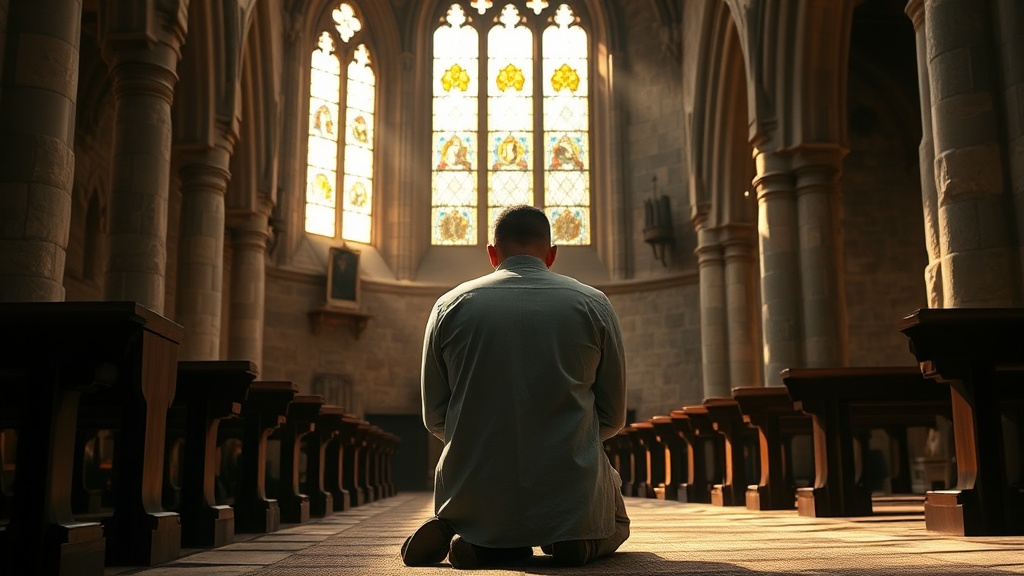
The Christian Approach to Death and Dying: What Faith Teaches Us About the Last Enemy
A theological and practical exploration of the Christian understanding of death — what happens when we die, how to face mortality with faith, and how to walk with the dying.
Testimonio
Change your heart radically through the love of Jesus Christ.
Death is the one reality that no human being escapes, yet our culture does everything it can to avoid thinking about it. Christians should be different. Not morbid — but honest. Not fearful — but clear-eyed.
The Christian faith has more to say about death than almost any other tradition. And what it says is simultaneously sobering and stunning.
What Death Is
1 Corinthians 15:26 calls death "the last enemy to be destroyed." This is important: death is an enemy. It is not natural, not neutral, not simply the next stage of a cosmic process. It is the fruit of sin entering a world that was made for life.
Genesis 2:17 — "for in the day that you eat of it you shall surely die." Death was the consequence of turning from God. Romans 5:12 — "sin came into the world through one man, and death through sin, and so death spread to all men because all sinned."
Death is not what God designed. Every death is a small reminder that something has gone wrong with creation. Every funeral is a lament over a world broken by sin.
And yet — and this is the staggering hope of Christianity — death is not the final word.
What Happens When We Die
The Bible speaks about what happens after death with more images than systematic precision. But several things are clear:
Believers go to be with Christ. Philippians 1:21-23 — Paul writes, "to live is Christ, and to die is gain... My desire is to depart and be with Christ, for that is far better." 2 Corinthians 5:8 — "we would rather be away from the body and at home with the Lord."
There is a resurrection. 1 Corinthians 15 is the New Testament's fullest treatment of resurrection. At Christ's return, the dead are raised — bodily, transformed, imperishable (verses 42-44). We are not disembodied spirits forever; we are resurrected bodies in a renewed creation.
Death is not the end. John 11:25-26 — "Jesus said to her, 'I am the resurrection and the life. Whoever believes in me, though he die, yet shall he live, and everyone who lives and believes in me shall never die.'"
The final state is renewal, not escape. Revelation 21:1-5 describes not disembodied heaven but a renewed heaven and earth — God making his dwelling among human beings, wiping away every tear, making all things new. The Christian hope is not escape from creation but the renewal of it.
How to Face Your Own Mortality
Christians are called to a particular kind of relationship with their own death — neither denial nor despair, but honest acceptance grounded in hope.
Psalm 90:12 — "Teach us to number our days that we may get a heart of wisdom." To number your days — to reckon honestly with your own mortality — is not morbid. It is wisdom. It is what allows you to live deliberately, to invest what matters, to release what doesn't.
Prepare practically. A will. Advance directives. Clear communication with your family about your wishes. These are acts of love — they spare your family the burden of guessing and the agony of conflict in your absence.
Prepare spiritually. Are you in right relationship with God? Are there unresolved relationships that need healing? Are there things you've been meaning to say that should be said now?
Live toward death without being consumed by it. The awareness of death that produces wisdom is not obsession — it is orientation. You live differently when you know the end of the story.
Walking with the Dying
Christians are called to be with the dying — not just at the funeral, but in the process of dying. This is a ministry that our death-avoidant culture sorely needs.
Presence is the primary gift. You don't need to say the right things. You need to show up. To sit. To hold a hand. To be present with someone in their final days and hours.
Speak truth gently. If someone is dying and they know it, pretending they're fine doesn't honor them. Gentle honesty — acknowledging what's happening while offering hope — is a gift.
Pray with them. Brief, genuine prayer. "Lord, be with us right now. Give John peace. Thank you that you're holding him." This is an enormous comfort to dying believers and often opens something in dying non-believers.
Read Scripture. Psalm 23, John 14, Romans 8, Revelation 21 — these passages have sustained the dying for millennia. Reading them aloud to someone who cannot read is a profound act of love.
Give permission to die. Many dying people seem to wait — for one more person to come, for permission from a loved one to let go. "It's okay, Mom. We're going to be okay. You can go." These words, spoken lovingly, often release people who have been holding on.
Don't abandon them in the process. The weeks of dying — not just the final moments — matter. Regular visits, consistent presence, engagement with the dying person's questions and fears. Don't disappear when things get hard to watch.
The Christian Funeral
A funeral is one of the most significant worship services a church offers. It is also one of the most powerful evangelistic opportunities — people who are otherwise resistant to the gospel become open at the graveside.
A Christian funeral should:
- Honestly acknowledge the reality and pain of death
- Proclaim the resurrection hope
- Celebrate the particular life of the person who has died
- Invite those present to respond to the gospel
- Support the grieving
It should not:
- Pretend death isn't devastating
- Skip over the person's actual life with generic platitudes
- Make the funeral entirely about the grieving rather than about God's faithfulness
- Be so somber it leaves no room for genuine resurrection hope
We'll cover the Christian funeral in more depth in our article on how to plan one.
Grief — The Christian Way
Christians grieve. 1 Thessalonians 4:13 — "But we do not want you to be uninformed, brothers, about those who are asleep, that you may not grieve as others do who have no hope." Not "do not grieve" — "do not grieve as those who have no hope."
Jesus wept at Lazarus's grave (John 11:35) — knowing he was about to raise him. Even certain resurrection doesn't eliminate the grief of loss. Grief is appropriate. Grief is human. Grief is what love looks like when it has lost something.
What the hope of resurrection does is not eliminate grief but give it a frame — a frame of ultimate hope that says "this loss is real and devastating, and it is not the end of the story."
A Prayer in the Face of Death
Lord, death is an enemy — but you have conquered it. What feels like an ending, you have declared a transition. Give me courage to face my own mortality with clear eyes. Give me grace to be present with those who are dying. And give those who grieve — including me — the comfort that can only come from knowing that the same God who raised Jesus from the dead will raise us too. Amen.
Frequently Asked Questions
What happens to Christians immediately after death? Most evangelical theologians hold that believers are immediately in Christ's presence ("at home with the Lord" — 2 Corinthians 5:8) while awaiting the final resurrection. Some traditions hold to an intermediate state of "soul sleep." The certain thing is: death is not the end, and what awaits believers is indescribably good.
Is it Christian to be cremated? The Bible doesn't forbid cremation. Most evangelical traditions consider it a legitimate option, though some prefer burial because of its resonance with the theme of planting and resurrection (1 Corinthians 15:42-44). This is a matter of individual conviction and cultural practice.
What does the Bible say about suicide? The Bible treats self-murder as a grave sin (you are not your own — 1 Corinthians 6:19-20). However, Christians debate whether suicide constitutes the unforgivable sin. Many theologians hold that God's grace covers even this, particularly in cases of severe mental illness. The pastorally wise response is compassion, not condemnation.
How do I comfort someone who is dying? Be present. Speak truth gently. Pray. Read Scripture. Hold their hand. Don't try to fix or explain. Sometimes the greatest gift is simply sharing the silence.
Is it wrong for a Christian to be afraid of death? Fear of death is natural — even Paul describes death as an enemy. Jesus prayed that the cup would pass from him. Fear of death doesn't indicate weak faith. The gospel doesn't eliminate the natural fear; it provides a foundation that ultimately overwhelms it.
Continue your journey in the app
Guided meditations, daily Scripture, journaling with verse suggestions, and more — designed for your spiritual growth.